 Editor's pick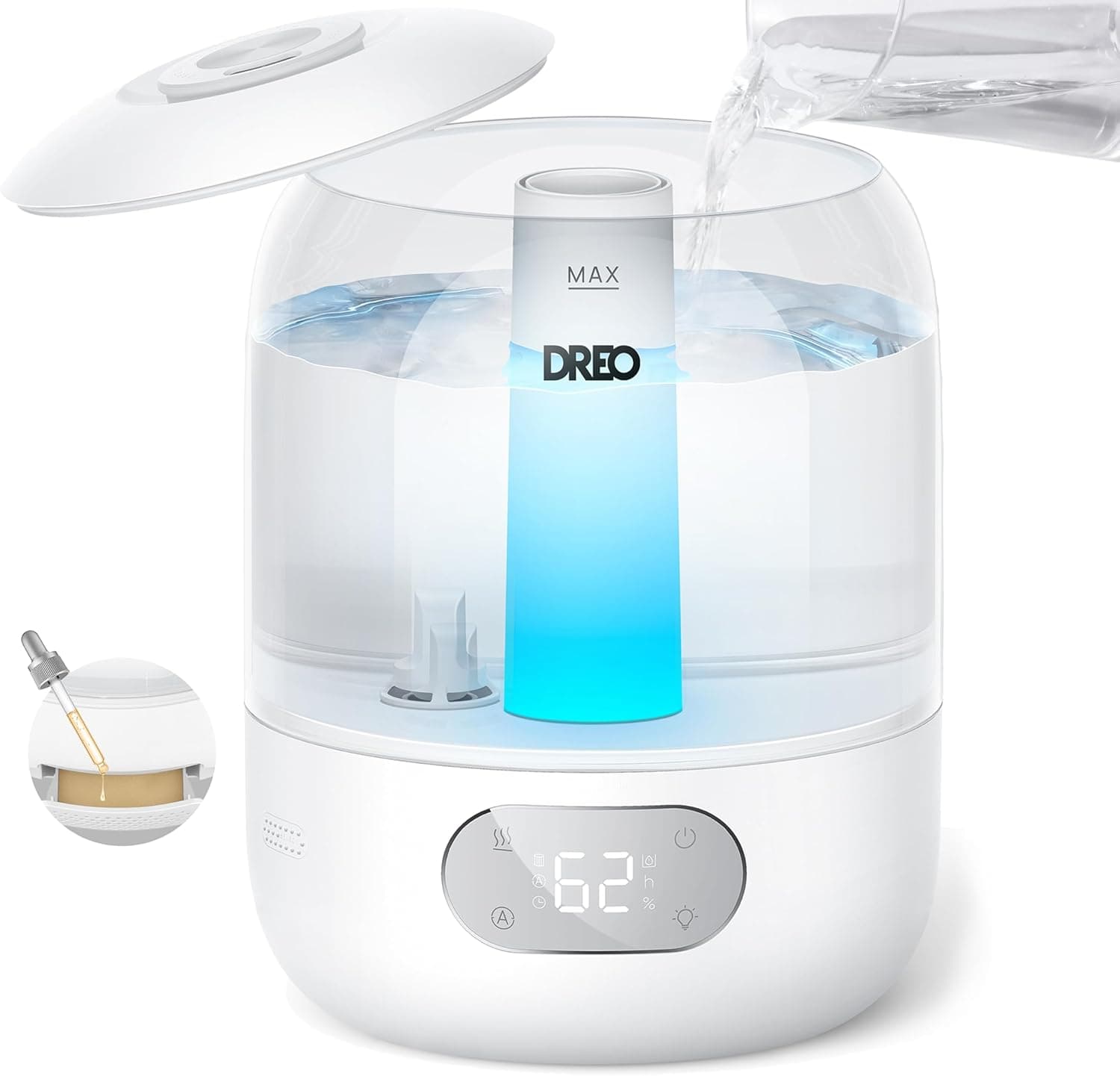
Air & ComfortCheck price on Amazon →
DREO Bedroom Humidifier
3L top-fill with humidity sensing and 30-hour quiet runtime.
4.7
Premium smart humidifier
Our verdict
Choose DREO when you want set-and-forget humidity targeting in bigger spaces.
Full review
585 words · ~3 min read
Set-and-forget humidity is the promise smart-home brands love to advertise, yet many bedroom humidifiers still expect you to guess mist levels while half asleep. DREO’s newer three-liter top-fill model pushes back with a built-in humidity sensor that adjusts output toward a target range, reducing the morning surprise of condensation on windows or, conversely, waking with desert-dry sinuses because the tank ran low unnoticed. For master bedrooms, open nurseries, and larger sleeping spaces, that automation is the headline reason to spend above basic dial-controlled units.
Capacity upgrades matter when square footage grows. Three liters on an ultrasonic platform translates to roughly thirty hours of runtime on economical settings, which can mean a full weekend of overnight coverage before a refill in moderate climates. The top-fill lid keeps that large tank serviceable: pour from a pitcher at the dresser instead of disassembling the base in the bathroom. Cool mist remains the safe default around children and pets, and DREO’s marketing around twenty-six decibel operation holds up as a whisper-class background—often masked entirely by white noise machines parents already own.
The integrated humidity sensor is where daily life improves. Instead of chasing a hygrometer readout with manual knob twists, you select an auto mode and let the unit throttle mist as conditions shift. Heating cycles, sudden cold fronts, and even a cracked window can swing indoor humidity faster than you notice; sensor-driven output smooths those swings while you sleep. It will not replace a whole-house HVAC humidifier in arid regions, but for a single large room it narrows the gap between hobbyist tinkering and consistent comfort.
Night light functionality on DREO tends toward the practical rather than theatrical. A soft glow supports feeding sessions, diaper changes, and late-night bathroom trips without flipping on ceiling fixtures that blast melatonin away. Light-sensitive households should still confirm brightness in their own room because sensor models sometimes place LEDs near the control panel. Footprint is slightly taller than compact two-liter competitors, so measure nightstand height and shelf clearance before ordering—especially if the humidifier shares space with monitors and chargers.
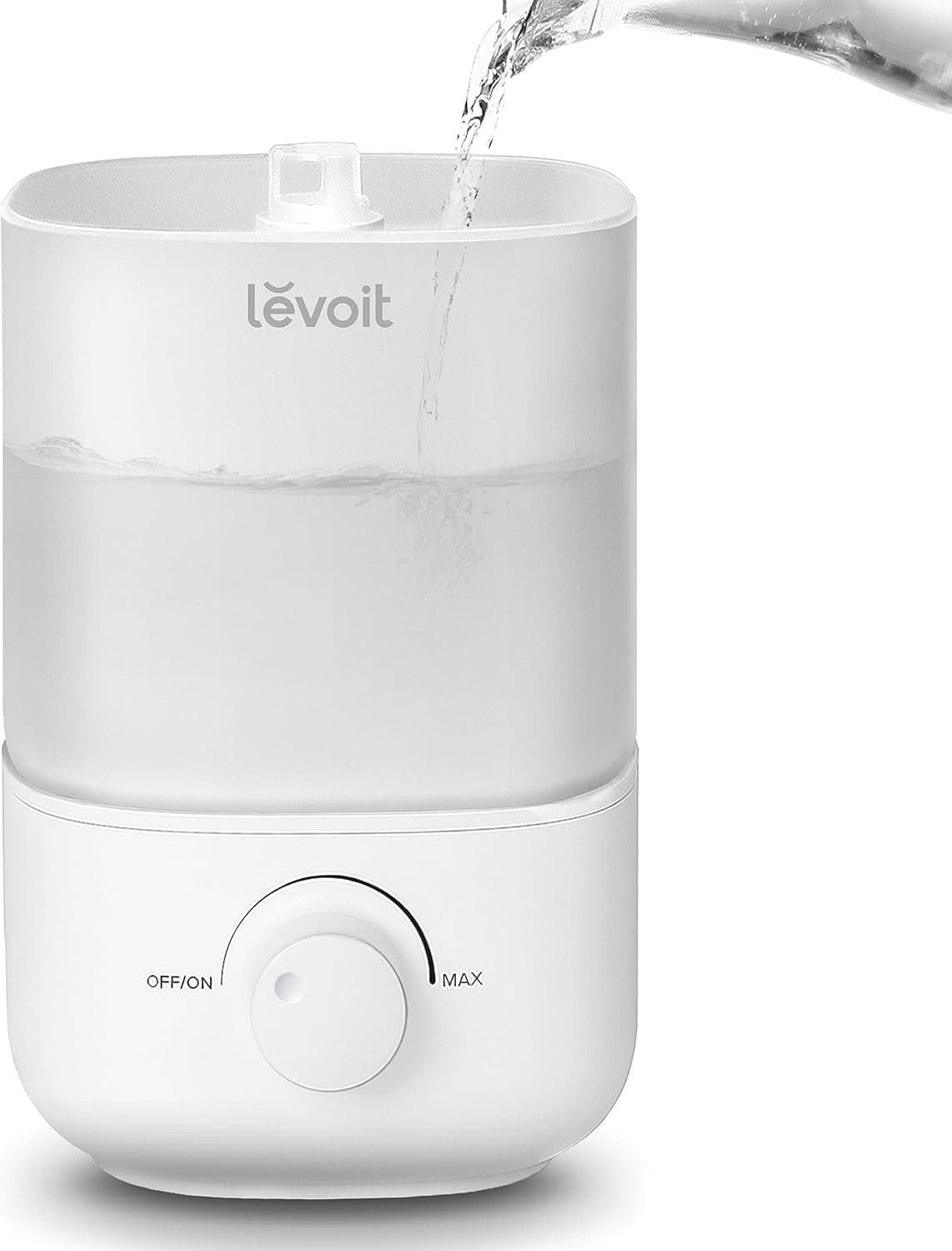
Maintenance expectations mirror other filterless ultrasonic designs: descale the transducer, rinse the tank, and use distilled or softened water if white dust appears on furniture. The larger tank can tempt users to run continuously without cleaning; resist that habit. Automation does not eliminate biology—stagnant water still grows film if ignored. DREO’s premium pricing versus entry LEVOIT models buys sensor intelligence and bigger capacity, not immunity from weekly wipes.
Who should choose DREO? Families in bigger bedrooms, plant-heavy sunrooms doubling as sleep spaces, or anyone tired of manual mist dialing. Who can skip it? Minimalists in small apartments with stable humidity who prefer a simpler, cheaper tank. In our editorial testing framework, DREO earns the premium pick when consistent relative humidity matters more than absolute lowest price. Pair it with a standalone hygrometer initially to validate sensor accuracy in your home, then trust the automation once readings align with comfort.
Firmware and filterless designs mean fewer recurring purchases than wick-based evaporative towers, which appeals to subscription-fatigued households. Hardwood floors and antique dressers still deserve coasters because any concentrated mist plume can dampen finishes if aimed directly downward. Rotate the outlet slightly upward for even distribution. During pollen season, higher indoor humidity may soothe irritated airways though it will not replace HEPA filtration. Track electricity pennies—they remain negligible compared with HVAC whole-house humidification installs. Calibrate desired percentage on the sensor panel once, then let overnight algorithms stabilize breathing comfort for partners with divergent heat preferences.
Pros
- ✓Built-in humidity sensor auto-adjusts
- ✓3L tank for large rooms
- ✓26dB whisper operation
- ✓Soft night light option
Cons
- −Slightly taller footprint
- −Premium vs basic LEVOIT models
More in this category
Editor's pick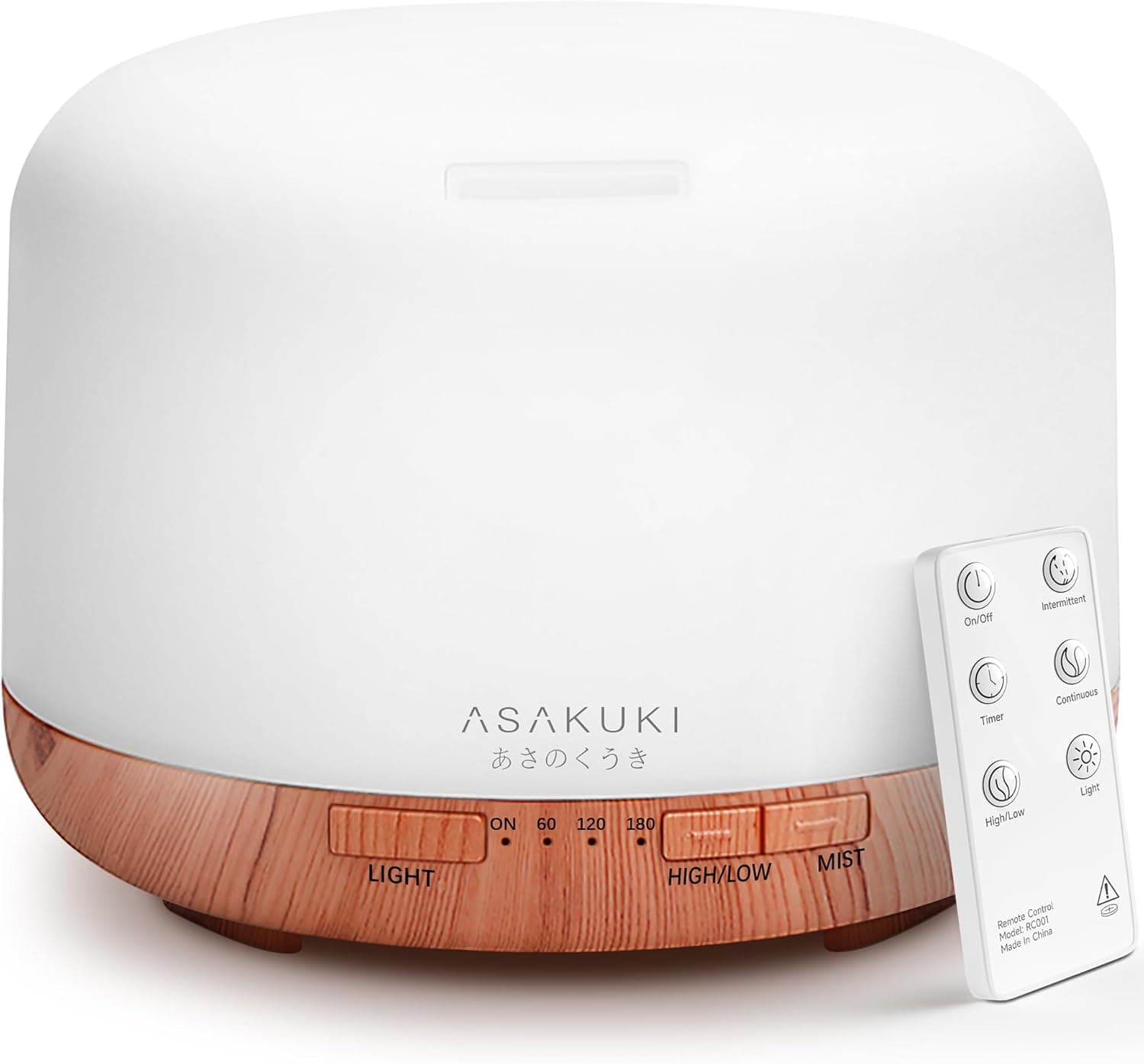
Air & Comfort
ASAKUKI Essential Oil Diffuser
500ml ultrasonic diffuser with remote and soft LED glow.
4.5